What you need to know now about flagstone vs. pavers:
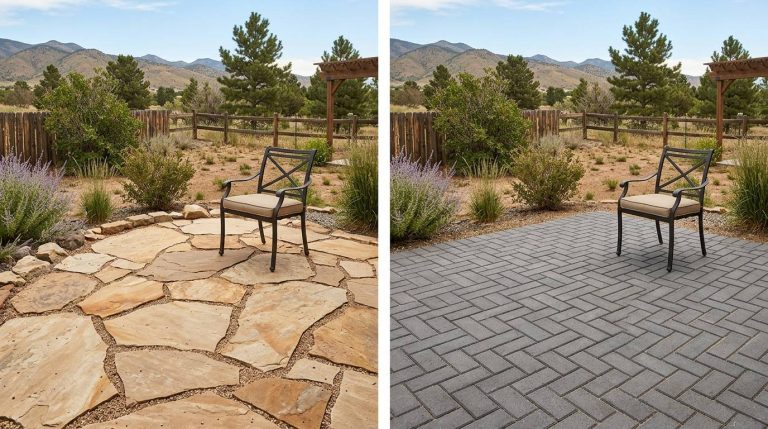
- Flagstone is natural sedimentary rock cut into irregular slabs, prized for an organic, one-of-a-kind look.
- Pavers are manufactured concrete, brick, or composite units, prized for a flat, uniform, and consistent surface.
- Installation is the real dividing line: flagstone is hand-fit like a puzzle and typically needs a skilled installer, while pavers interlock in repeatable units and are far more DIY-friendly.
- Colorado’s freeze-thaw cycles treat these two materials very differently, which matters more here than it does in a milder climate.
Keep reading for a full breakdown of both, two comparison tables, and how to decide which one fits your yard.
What Is the Difference Between Flagstone and Pavers?
Flagstone is a natural stone, typically sandstone, limestone, or bluestone, quarried and split into flat, irregularly shaped slabs. Pavers are manufactured units, usually concrete, brick, or composite, produced in uniform shapes and sizes. The core difference comes down to origin: one is cut from the earth, the other is built in a factory.
That single difference in origin shapes almost everything else about how each material looks, installs, and holds up over time.
What Is Flagstone?
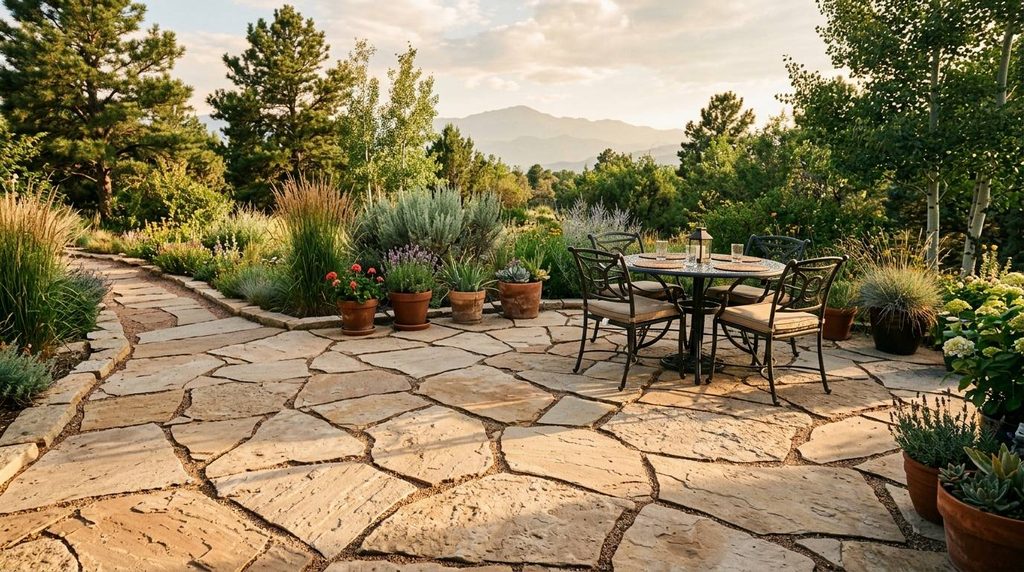
Flagstone is quarried, not manufactured, which is exactly why no two pieces look alike.
Material and Origin
- Cut from natural sedimentary rock, most commonly sandstone, slate, limestone, or bluestone
- Split along natural fracture lines, which is what gives each piece its irregular, flat shape
- Colorado sits on some of the most historically significant flagstone deposits in the country. According to History Colorado, the sandstone quarried near Lyons has been prized for its quality and distinctive color since the 1880s and was shipped as far as Chicago and New York
Appearance
- Organic, irregular shapes with unique earth tones in every piece
- No two installations ever look identical, even using stone from the same quarry
- Reads as timeless and rustic rather than manufactured
Best For
- Garden paths and patios meant to blend into a natural landscape
- Homeowners who want a surface that looks like it has always belonged there
- Properties where a one-of-a-kind, artisan look matters more than uniformity
What Are Pavers?
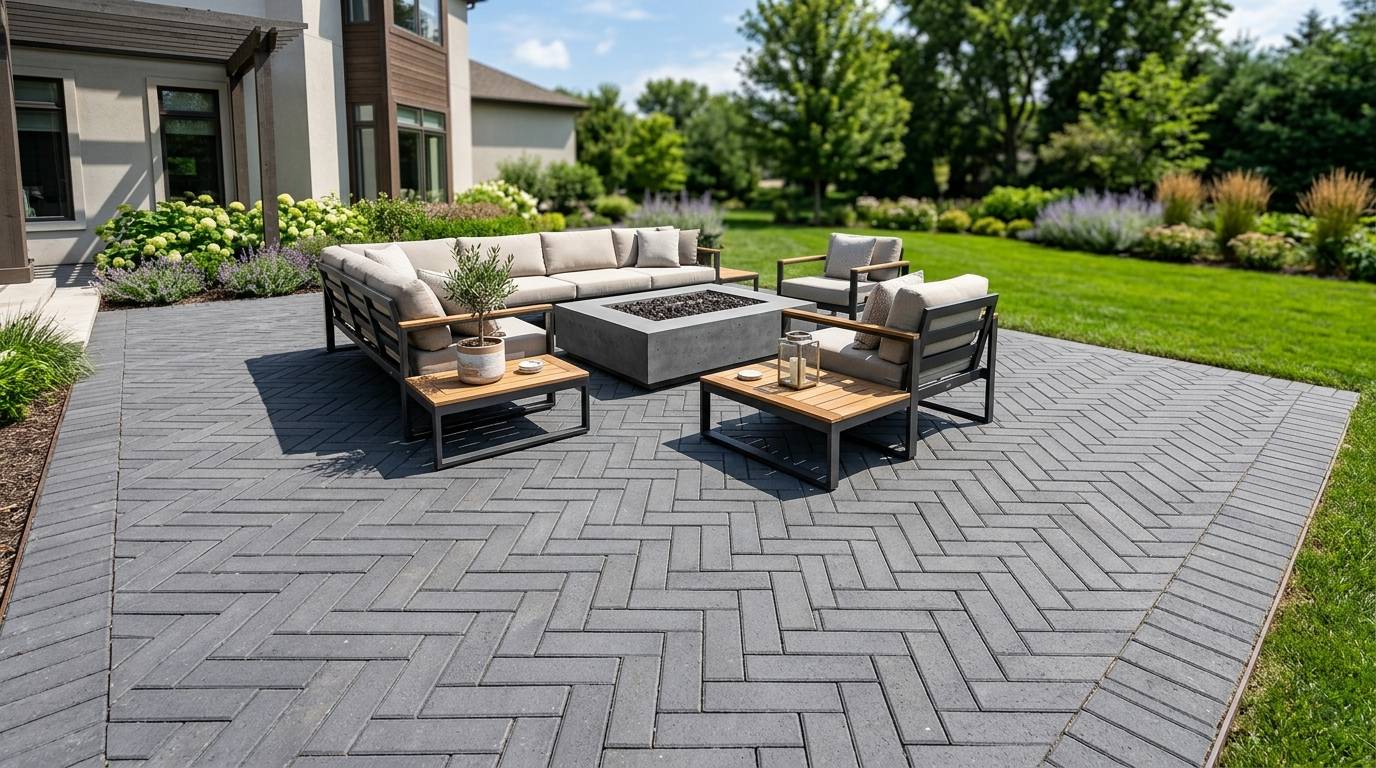
Pavers trade natural variation for engineered consistency, and that trade-off is the whole point.
Material and Manufacturing
- Made from concrete, clay brick, or composite materials, cast or fired in controlled factory conditions
- Produced to consistent dimensions, so every unit matches the next
- According to the Concrete Masonry & Hardscapes Association, concrete pavers are manufactured with two to three times the strength of typical poured concrete, since factory curing happens in a controlled environment rather than at the mercy of outdoor conditions
Appearance
- Uniform, structured, and consistent in both color and size
- Available in a wide range of shapes, colors, and laying patterns
- Reads as clean and intentional rather than organic
Best For
- Driveways, dining patios, and areas with heavy foot or wheel traffic
- Homeowners who want a flat, predictable surface from day one
- Property owners who plan to install the surface themselves
Ready to talk through which material fits your yard? Our landscaping and outdoor living team designs and installs both flagstone and paver patios from the ground up. Explore: Landscaping & Outdoor Living Services →
Flagstone vs. Pavers: Direct Comparison
| Feature | Flagstone | Pavers |
|---|---|---|
| Material | Natural sedimentary rock | Manufactured concrete, brick, or composite |
| Appearance | Organic, irregular shapes and earth tones | Uniform, structured, consistent color and size |
| Installation | Hand-fit like a puzzle, typically needs a pro | Interlocking uniform units, DIY-friendly |
| Surface Flatness | Naturally variable, cleft surfaces | Consistently flat and level |
| Freeze-Thaw Performance | Varies by stone type and sealing | Semi-flexible system that shifts with the ground |
| Repairability | Full piece often needs resetting or replacing | Individual units lift out and reset easily |
| Permeability | Depends on joint width and material | Can be installed as permeable systems |
What Does “Freeze-Thaw Performance” Actually Mean?
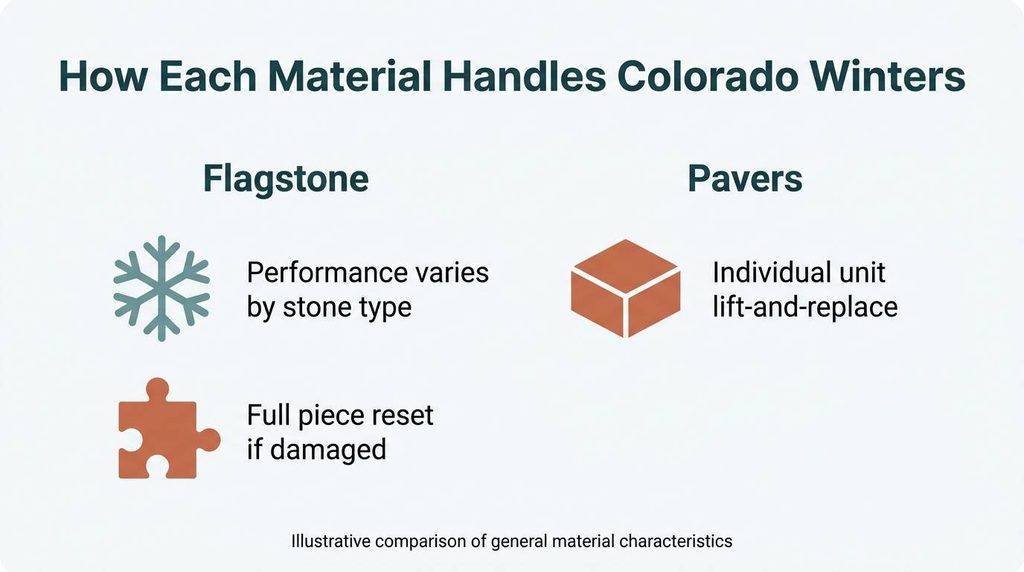
Colorado’s freeze-thaw cycles matter more here than in most states. ASTM International, the organization that sets material testing standards, notes that natural stone’s resistance to repeated freezing and thawing varies significantly depending on the type of stone. Sandstone, limestone, and bluestone all hold up differently, which is why the specific type of flagstone matters as much as the decision to use flagstone at all.
What Are the Pros and Cons of Flagstone?
Pros
- Offers a timeless, rustic look that blends naturally into garden landscapes
- Every piece is genuinely unique, so no two patios ever look the same
- Ages gracefully, often looking better with a few years of weathering
Cons
- Irregular thicknesses and cleft surfaces can make patio furniture wobble or create tripping hazards
- More prone to shifting or cracking if it is dry-laid incorrectly over unstable soil
- Individual pieces are harder to source as an exact match if one needs replacing later
What Are the Pros and Cons of Pavers?
Pros
- Provide a flat, level, and stable surface, ideal for dining tables, fire pits, and wheeled traffic
- If one unit stains or cracks, that single piece lifts out and gets replaced without disturbing the rest
- Consistent sizing makes patterns, borders, and curves easier to plan and install precisely
Cons
- Can look more structured or manufactured, lacking the organic character of natural stone
- Joints between units may need occasional sand refresh or weed control over time
- A large uniform field of pavers can read as less distinctive without pattern or color variation
Curious how a paver patio compares to a covered patio setup? Our comparison of pergolas and patio covers breaks down another common decision homeowners face right after choosing their patio surface. Read: Pergola vs. Patio Cover →
Which Should You Choose?
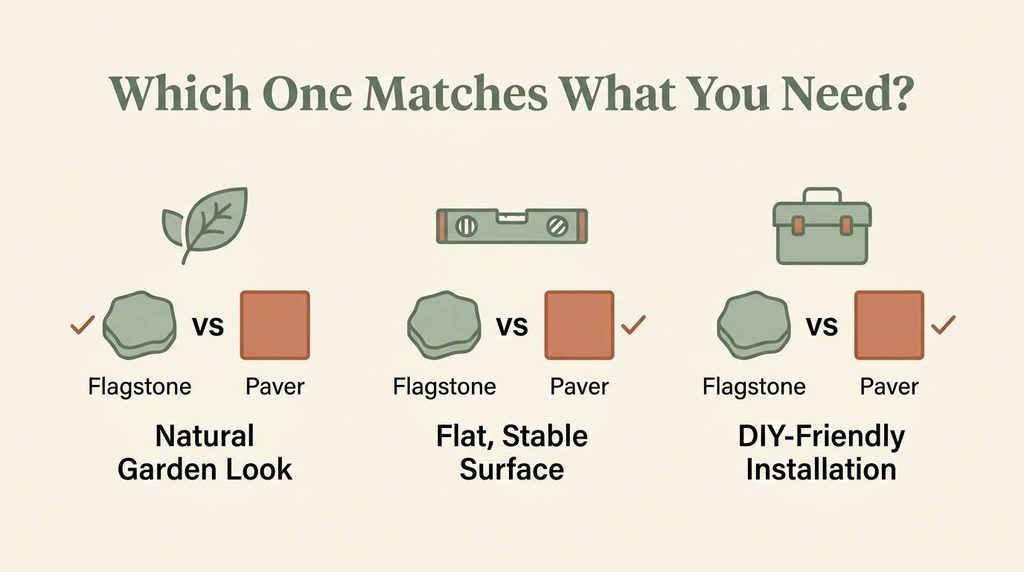
Go with flagstone if you want a high-end, rustic, organic aesthetic and plan to work with a professional installer for the hand-fitting process. Go with pavers if you need a flat, durable, low-maintenance surface for heavy use, such as a driveway or a large entertaining patio, or you want a straightforward DIY project.
Which Material Fits Your Priority?
| If Your Priority Is | Consider | Why |
|---|---|---|
| A one-of-a-kind, natural look | Flagstone | Every piece is genuinely unique |
| A perfectly flat surface for furniture or a fire pit | Pavers | Uniform thickness keeps everything level |
| A weekend DIY project | Pavers | Interlocking units are simpler to place than hand-fit stone |
| Fixing a small damaged spot later | Pavers | Individual units reset without disturbing the rest |
| Blending into a garden or natural setting | Flagstone | Organic shapes and earth tones read as part of the landscape |
| Managing runoff on a sloped lot | Either, with permeable joints | Both can be installed with gapped, permeable joints |
Working with a sloped or uneven lot before you even get to patio material? Our guide to retaining wall types covers how to prep and level a yard before any patio surface goes down. Read: Retaining Wall Types Explained →
Why Homeowners Trust Genesis Group for Patio Installation
Choosing between flagstone and pavers is rarely just about which one looks better in a photo. Soil type, drainage, slope, and how the space will actually be used all shape which material and installation method will hold up on a specific property, especially through a Colorado winter.
We install both materials across the Pikes Peak region, matched to each property’s soil, sun exposure, and how the homeowner plans to live in the space, not just how it photographs on day one.
Want to see real flagstone and paver patios before deciding? Our project gallery has both materials installed across a range of Colorado Springs properties. See: Our Project Gallery →
Every property’s soil, slope, and sun exposure calls for a slightly different approach, which is why we design and install each patio around the specific site rather than a generic template.
Reach out and we will walk your property, talk through which material actually fits your soil and your goals, and give you a straight answer on what is possible.
Frequently Asked Questions about Flagstone vs. Pavers
Why Is Flagstone More Labor-Intensive to Install Than Pavers?
Flagstone comes out of the quarry in irregular pieces, so every patio is essentially a puzzle that has to be hand-fit piece by piece to keep joints tight and the surface reasonably level. Pavers, by contrast, are manufactured to identical dimensions and simply interlock in repeating rows, which is why paver installation moves faster and requires less specialized fitting skill.
How Thick Should Flagstone Be for a Patio?
Most flagstone used for walking surfaces runs between 1 and 2 inches thick, with thicker stone generally holding up better over a longer lifespan and resisting cracking under foot traffic or furniture weight. Thinner flagstone, often under an inch, is more commonly used for stepping stones or accent areas rather than a full patio surface that sees regular use.
What Is the Best Joint Material for Installing Flagstone?
Polymeric sand is a common choice because it hardens after activation with water, which helps resist weed growth and erosion between the stones. For a softer, more natural look, some homeowners choose decomposed granite or fine gravel in the joints instead, though these options typically need more frequent refreshing than polymeric sand.
Is It Okay to Lay Flagstone on Top of Gravel?
Yes, a compacted gravel base is actually the standard foundation for a stable flagstone patio, since it allows water to drain away from the stone rather than pooling underneath it. The gravel needs to be properly compacted in layers rather than simply poured and leveled, or the flagstone can settle unevenly within the first year or two.
What Are the Downsides of Using Pavers?
Pavers can read as more structured or manufactured, lacking the organic, one-of-a-kind character that comes with natural stone. The joints between units also need occasional maintenance, such as refreshing polymeric sand or pulling weeds, and a large uniform field of pavers without pattern variation can look flat or repetitive compared to a stone surface.
Can You Mix Flagstone and Pavers in the Same Patio Design?
Yes, and it is a common design move, often using flagstone as a border or focal path and pavers to fill a larger central area. The key to making the combination look intentional rather than mismatched is keeping a consistent color palette between the two materials so they read as one cohesive design rather than two unrelated surfaces.
How Do You Clean Efflorescence or Stains Off Pavers and Flagstone?
Efflorescence, the white, chalky residue that sometimes appears on concrete pavers, usually clears on its own with regular foot traffic and rain, though a mild vinegar-and-water solution can speed up the process. Organic stains on flagstone, like leaf tannins or moss, typically respond well to a soft-bristle brush and a stone-safe cleaner, since harsh acidic cleaners can damage certain stone types over time.
The Right Patio Material Comes Down to Local Experience
Flagstone and pavers can both hold up beautifully in a Front Range backyard, but only when the material is matched to the actual soil, slope, and freeze-thaw conditions on that specific property rather than picked from a photo online. That distinction is where most patio regrets start, and it is exactly what a local installer brings that a generic buying guide cannot.
Genesis Group has installed both materials across the Pikes Peak region long enough to know which stone holds its color through a Colorado winter, which base depth actually keeps pavers level after a hard freeze-thaw cycle, and which choice fits the way a family really uses their backyard. That is the kind of judgment worth having on your side before the first piece of stone or paver goes into the ground.
Ready to get a straight answer for your yard? Contact Genesis Group →