What you need to know now about deck building costs:
- Most homeowners pay between $4,100 and $11,700 for a professionally built deck, with $30 to $60 per square foot covering labor and materials combined.
- Size is the single biggest cost driver. A 10×10 deck and a 16×20 deck can differ in price by $15,000 or more.
- Material choice changes your long-term cost more than your upfront cost. Composite runs $35 to $60 per square foot in materials alone but needs almost no maintenance for 25-plus years.
- Colorado Springs’ snow load and frost depth requirements add real, unavoidable cost to the structure itself, not just the permit fee.
Keep reading for the full breakdown by size, material, and what local code requirements actually add to your final number.
Costs shown throughout this article are general estimates, not a quote. Pricing varies by project scope, materials, labor rates, and site conditions, so use these figures to frame your budget thinking, then get a real number from a contractor who has measured your space.
How Much Does It Cost to Build a Deck?
A professionally built deck typically costs between $4,100 and $11,700 in 2026, with most homeowners landing around $7,800 total. On a per-square-foot basis, expect $30 to $60 for labor and materials combined, though that’s a national figure. Composite decks, elevated designs, and anything with a full stair run in Colorado Springs commonly land at or above the top of that range once code-driven framing gets factored in.
What Drives That Range So Wide
- Size: More square footage means more lumber, more footings, and more labor hours.
- Material: Pressure-treated wood sits at the low end. Composite and PVC sit at the high end.
- Height and access: A ground-level deck is simpler to build than an elevated deck requiring stairs, railings, and additional structural support.
- Site conditions: Sloped yards, rocky soil, and tight access all add labor time before the first board goes down.
We’ve built decks across El Paso and Douglas County ranging from simple 10×10 platforms to full multi-level structures with built-in seating, and the size and material decisions almost always explain 80 percent of the final price difference between two otherwise similar projects.
Want a number specific to your yard instead of a general range? Our deck services page has a built-in pricing calculator that factors in your size, material, and design choices. Price your deck project →
How Does Deck Size Change the Total Price?
Deck cost scales directly with square footage, but not in a perfectly straight line. Larger decks often cost less per square foot than small ones because fixed costs like permits, delivery, and site setup get spread across more area.
Cost by Standard Deck Size
| Deck Size | Square Footage | Estimated Cost Range |
|---|---|---|
| 10×10 | 100 sq. ft. | $3,000 to $6,500 |
| 12×12 | 144 sq. ft. | $4,300 to $9,000 |
| 14×20 | 280 sq. ft. | $8,400 to $17,500 |
| 16×20 | 320 sq. ft. | $9,600 to $20,000 |
Why the High End Keeps Climbing
- Adding a second level or a wraparound shape increases framing complexity beyond what square footage alone predicts.
- Stairs and railings are priced separately from the deck surface itself, and they scale with height, not footprint.
- A deck built over a walkout basement or a sloped grade needs deeper, more engineered footings than a flat-yard build.
How Do Decking Materials Compare on Cost and Lifespan?
Pressure-treated wood costs the least upfront but demands the most upkeep, while composite and PVC cost more initially and need almost none. The right material depends on whether you’re optimizing for today’s budget or the next 20 years of weekends.
Material Cost and Maintenance at a Glance
- Pressure-Treated Wood: $15 to $25 per square foot in materials. Affordable and widely available, but needs annual staining or sealing to resist rot and UV damage.
- Cedar or Redwood: $25 to $35 per square foot in materials. Naturally insect- and rot-resistant, still needs regular maintenance to keep its color and structural integrity.
- Composite or PVC: $35 to $60 per square foot in materials. Higher upfront cost, but little more than an occasional rinse for 25 years or more.
Composite and PVC are gaining ground fast for a reason. Composite remains the single most chosen decking material for new and upgraded decks nationally, ahead of pressure-treated lumber, stone, and natural wood, according to Houzz’s 2026 U.S. Outdoor Trends Study.
Mid-range and premium composite lines installed in Colorado Springs often price above the national materials-only figure above once labor, fasteners, and picture-framed edges are added in.
Which Material Actually Fits Colorado’s Climate
- Freeze and thaw cycles are harder on wood than most homeowners expect. Moisture gets into the grain, freezes, and slowly splits the fibers apart over repeated winters.
- Composite and PVC don’t absorb moisture the same way, so they hold their shape through our temperature swings without the seasonal touch-up wood needs.
- UV exposure at altitude fades and dries out unsealed wood faster than the same board would fade at sea level, shortening the gap between resealing jobs.
Not sure which material actually looks right on your home? See real composite, cedar, and PVC decks we’ve built around Colorado Springs. Browse our project gallery →
What Labor Costs Are You Actually Paying For?
Labor typically makes up about half of your total deck cost, running $15 to $35 per square foot on top of materials. That covers site prep, framing, footings, decking installation, and the inspections that come with a permitted build.
Professional Installation vs. DIY
- Professional installation: $15 to $35 per square foot in labor, layered on top of material costs. This includes structural framing, code-compliant footings, and coordinating required inspections.
- DIY: You can bring your material-and-hardware cost down to roughly $15 to $35 per square foot total, but you take on permitting, structural design, and 100 percent of the liability if something is built wrong.
- The real DIY math: Saving on labor sounds appealing until you price out tool rentals, disposal fees, and the time it takes to learn code requirements you’ll only ever use once.
What a Professional Actually Handles For You
- Pulling the correct permit and preparing structural plans that meet local snow load and frost depth requirements.
- Sizing footings, beams, and joists to span your specific layout safely, not just to a generic online calculator.
- Flashing and waterproofing the ledger board correctly where the deck attaches to your house, a spot that causes serious hidden rot when a DIY build gets it wrong.
- Carrying liability insurance and workers’ compensation, so you’re not personally on the hook if someone gets hurt on the job or a structural mistake shows up later.
- Ordering through trade accounts, which often means better material availability and fewer backorder delays than buying composite boards retail.
- Scheduling and passing the inspections your permit requires before the deck is considered complete.
Weighing a DIY build against hiring a professional? Talk to our team about what a properly engineered deck actually involves in Colorado Springs. See our deck building services →
What Hidden Costs Do Most Deck Estimates Leave Out?
Stairs, railings, and under-deck drainage are the three costs that most estimates quietly leave out, and they can add thousands to a project that looked affordable on paper. Knowing about them before you get a quote keeps the final number from feeling like a surprise. From lighting and landscaping to fire features, outdoor kitchens, and custom decks in Broadmoor, you’ll have one trusted team managing it all.
The Add-Ons That Change Your Total
- Stairs: A full run of stairs with proper framing and footings can run close to $10,000 on its own, especially on a multi-level or elevated deck.
- Railings: Code-required railings on any deck over 30 inches high add both material and labor cost that scales with your deck’s perimeter, not its square footage.
- Under-deck drainage: A system that channels water away from the space beneath an elevated deck turns unusable ground-level storage into a dry, usable area, at an added cost most estimates don’t mention until later.
- Lighting and finishing details: Post cap lights, stair lighting, and picture-frame board trim are common upgrades that rarely appear in a base estimate.
Ground-Level vs. Elevated: Why It Matters for Price

- A ground-level deck under 30 inches high often skips the stairs and guardrail requirements that drive up elevated deck costs.
- An elevated or multi-level deck needs engineered stairs, code-height railings, and sometimes a second set of footings, which is why two decks with identical square footage can differ by thousands.
What Do Colorado Springs’ Building Codes Add to the Cost?

Local snow load and wind requirements mean a deck built to Colorado Springs code needs heavier framing than the same deck built to a generic national spec, and that difference shows up in your final price. That extra framing is what keeps the structure standing through a real Front Range winter.
The Numbers Behind the Requirement
- Decks fall under the jurisdiction of the Pikes Peak Regional Building Department, which requires a permit for decks, including those built with composite materials, across Colorado Springs and El Paso County.
- Structures below 7,000 feet of elevation, which covers nearly all of Colorado Springs, must be engineered for a ground snow load of 43 pounds per square foot and a basic wind speed of 130 mph, according to the department’s current design criteria.
- Using the department’s published valuation-based fee table, a typical $8,000 deck runs about $128 in permit fees, while a $20,000 project lands closer to $224.
- Footings must be set below the local frost depth, which means digging deeper here than a contractor working in a milder climate would ever need to.
Sloped Lots Add Another Layer
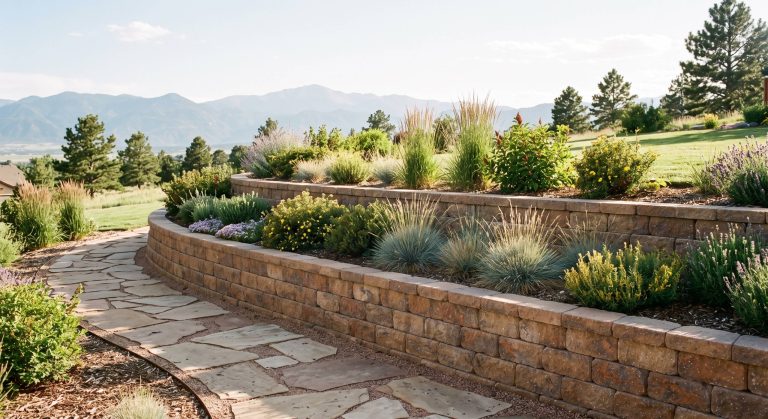
Many Colorado Springs neighborhoods sit on grade changes significant enough that a deck’s substructure interacts directly with a retaining wall or graded slope nearby. When that’s the case, the deck footings and the retaining wall need to be engineered together, not treated as two separate projects that happen to share a yard.
Building on a sloped lot or near an existing slope? Our hardscape team can coordinate retaining wall and deck footings so both hold up long term. Explore our retaining wall and hardscape services →
Does a New Deck Pay You Back at Resale?
A wood deck addition recoups a strong share of its cost at resale in our region, more than most other exterior projects homeowners consider. That makes it one of the more financially sound upgrades you can make to a Colorado Springs home, even before counting the years of use you get out of it.
What the Regional Data Actually Shows
- A wood deck addition in the Mountain region averages $18,253 in cost and recoups 97.3 percent of that at resale, according to the 2025 Cost vs. Value Report from the Journal of Light Construction.
- A composite deck addition averages $26,342 and recoups 82.1 percent, still a stronger return than most interior remodeling projects in the same report.
- Both figures outperform a standalone backyard patio project, which recoups closer to 38 percent in the same regional data.
Most homeowners we talk to aren’t building a deck purely for resale math. The bigger return is usually the number of evenings you actually spend out there, but it’s worth knowing the investment holds up financially too.
Curious how deck and outdoor upgrades stack up against other home improvements? We dug into the full picture. Read our guide to home improvement value →
What Should You Ask a Deck Builder Before You Sign?
The right questions before you sign focus on how a builder plans for your specific site, not just the material options they offer. A contractor who walks your yard before quoting a firm price is protecting you from the change orders that come from skipped planning.
Questions Worth Asking
- Do they visit the site before quoting, or price from a phone call and a few photos?
- Can they explain how they’re sizing footings and framing for your specific soil and slope, not a generic template?
- Do they handle the permit and structural plans themselves, or leave that step to you?
- What’s their realistic timeline from signed contract to a finished, inspected deck?
That last question matters more than most homeowners expect going in, since weather, material lead times, and inspection scheduling all affect when you’ll actually be using the space.
Wondering how long your project will actually take? We broke down what affects deck timelines from permit to final walkthrough. Read our deck building timeline guide →
Frequently Asked Questions about Deck Building Costs
Does adding stairs really cost that much more than the deck itself?
Yes, and it surprises most homeowners. A full run of stairs involves its own footings, stringers, and railings, which is real structural work separate from the deck surface. On an elevated deck, stairs alone can approach $10,000 depending on height and material, so it’s worth pricing them as their own line item rather than assuming they’re a small add-on.
Can I build a smaller deck now and add on to it later?
In many cases, yes, but only if the original footings and framing were sized to support the future addition. If you’re planning to expand later, tell your contractor up front so the initial structure is built to carry that extra load. Retrofitting undersized footings after the fact is far more disruptive than planning for it from the start.
Do I need a permit for a small, low deck?
In most cases, yes, especially if the deck attaches to your home. Freestanding decks under a certain height above grade sometimes qualify for an exemption, but requirements vary by jurisdiction, and composite decks are treated the same as wood under local code. Confirm with your building department before assuming a small project is exempt.
How long does a typical deck project take from permit to completion?
Timelines vary by size and complexity, but most straightforward decks move from permit approval to substantial completion within a few weeks once construction starts. Permit review itself typically adds one to two weeks before work can begin, which is worth building into your overall project timeline from the start.
Does composite decking really need zero maintenance?
Not quite zero, but close. Composite and PVC decking don’t need staining or sealing the way wood does, but an occasional rinse to clear dust, pollen, and debris keeps it looking its best. The maintenance difference compared to wood is real, it’s just not literally nothing.
Ready to Get a Real Number for Your Yard?
Every price in this guide is a range for a reason, it has to cover every possible yard out there. Yours is one specific yard, and that’s what turns a range into a real number.
Genesis Group has priced and built decks across El Paso and Douglas County long enough to know where estimates usually go wrong. Let’s skip the guessing and get you an actual quote.
Ready to talk through your project? Contact Genesis Group or call us directly at (719) 212-1502.